
By the time you have reached the end of this article, there is a good chance you will have forgotten this opening sentence.
Well, not now, obviously, you have committed it to memory to prove to me otherwise.
The point here is that we forget stuff. We do it all the time. We read things, we hear things, we experience things, and almost immediately the process of forgetting begins. It is a well-researched problem, starting in the 19th Century when Hermann Ebbinghaus began to experiment on his own memory and developed the Ebinghaus Forgetting Curve. It stipulates that we forget things increasingly over time.
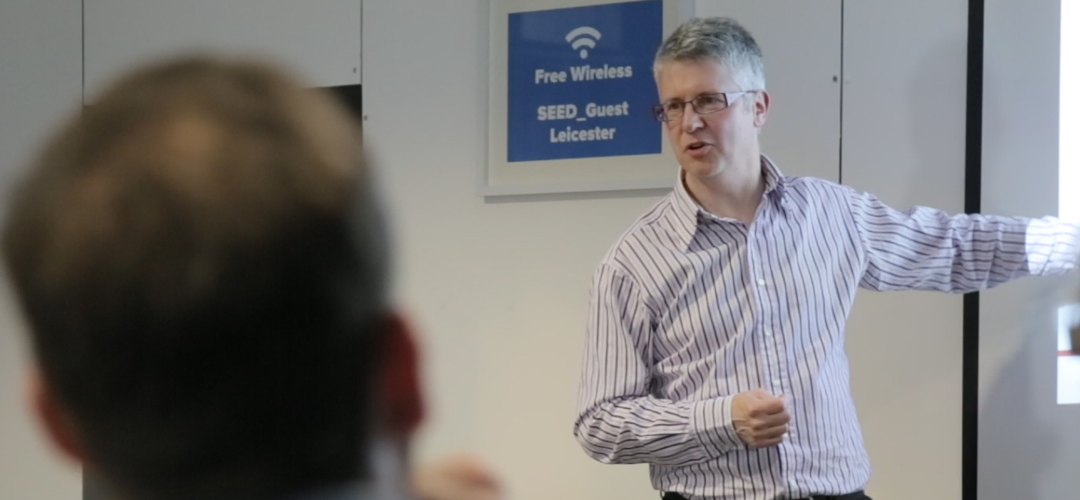
For me, as a trainer, this is a crucial thing to consider. I design and deliver training courses on leadership and project management. So the forgetting curve is something that profoundly affects how I do my work. In fact, I sometimes start courses by telling people that, by the next day, they will have forgotten 90% of what we have talked about.
If you think that is bad, the online courses fare much worse for many reasons which I will cover another time. So how do I address the forgetting curve?
I provide notes
My Powerpoint slides are very sparse in terms of information. They are there as visual cues for the course. So, I write detailed notes for each course and hand them out to my attendees so that they have something to go back to when they want to refresh their memory. They can also add their own notes to them as we go through the course to help the attendees link the course to their work.
I interact a lot
I build lots of small exercises and opportunities to reflect because these have been shown to really help retention of information. Splitting courses to small segments of me speaking followed by an exercise or discussion keeps people engaged and means they listen more intently and remember more.
I also like energy in my courses, I like to have my attendees get up and move around. It keeps their blood moving and freshens up the atmosphere.
I consider different needs
People have different preferences in how they learn. Some prefer to hear instructions, some prefer to see graphs and images, some prefer reading and some learn better by doing. I try to make sure that I deliver each topic in a number of ways to address each style.
I link the course to real life
Within my courses, I ask attendees to bring real life examples into the exercises. Real learning happens when people take a new topic and synthesise it to apply to a situation they are currently facing. It is a very powerful way of cementing learning.
I give out work-based tasks
I like to give out tasks to my attendees where they can implement a specific piece of learning in theor job. I like to do this in conjunction with the attendees’ managers so that they know what is happening. The work-based activities allow the attendees to learn by doing, which is a very powerful approach.
I shorten my courses
I prefer to run 2 or 3 short sessions rather than have people for a whole day. A day long course is difficult for attendees, their attention span wavers at several times and the last hour can be more about crowd control than learning. Having two 3 hour sessions works much better than a full day’s course.
I use Paused Repetition
In my leadership development course, I split the sessions over a few months and that means we can meet every four weeks and recap previous sessions. This allows the ideas and lessons to become engrained. Paused Repetition has been shown to be a very powerful memory aid.
The Client’s Obligations
I hope you can see that I spend a lot of time and effort in trying to make my courses interesting and stimulating and in trying to ensure that my attendees can retain as much information as possible to help them develop in their roles. However, the true learning happens in the workplace. It really doesn’t matter what I do when delivering training if the attendees do not then have the opportunity to use the new information. In fact, there is a 70:20:10 rule of training where it is understood that 70% of employee learning comes from challenging on-the-job assignments, 20% from developmental relationships (like feedback and role models), and only 10% formal coursework and training. It’s a guideline, not a strict set of rules but it does guide my approach to designing and delivering training.
Therefore most important thing I do, when delivering a training course, is sit with the client and make sure they understand why they are engaging me, what the desired outcome and what they will do differently to allow their staff show off their new skills. Without that commitment from the client, they are just wasting their money.
Great article Paul. I found that when I was in corporate world, the best way for me to really learn after a training course was to go back to the office and pester my boss to let me do what I’d been learning about. Now I know I’m a pragmatic/activist and learn best by doing rather than listening and reading. My wife, on the other hand, is a theoretical/perfectionist and she really does learn well by reading and attending courses.
When I train, I usually have lots of stories and comparisons to every day life outside of IT and cybersecurity
Thanks Trevor, for a lot people, doing the activity in the work environment really cements the learning better than any other way.