
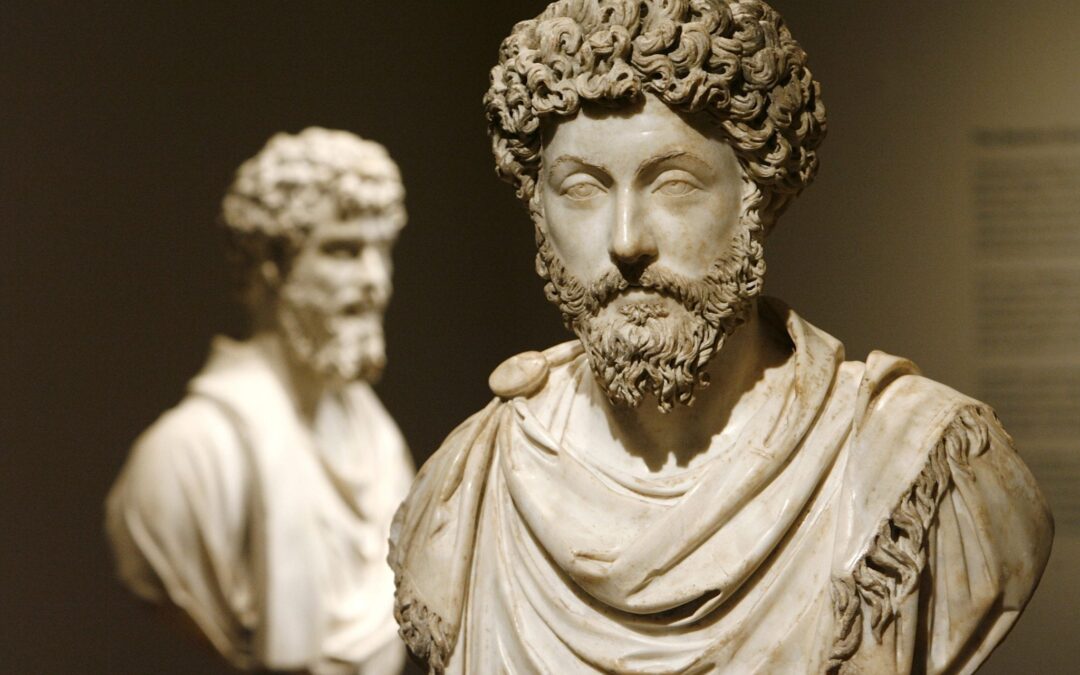
The Ancient Greeks had a school of philosophy called Stoicism which had, at its core, a focus on virtue as the key to a happy life. Stoics prioritise control over one’s thoughts and actions rather than on external circumstances, and accept what cannot be changed. Within this belief was the acceptance that none of us are perfect. In fact, they said that the pursuit of perfection led to unhappiness.
OK, I agree, that is quite a deep start to a blog post, but those Greek philosophers were onto something. None of us is perfect. We make mistakes. The aim should always be to improve a little bit every day.
As a manager, Stoicism provides a whole host of useful habits: accepting that nothing can be perfect, realising that we should try to be better and accepting what we can and cannot change. They are really good mindsets for any leader to adop and ca help free us up from stress and unhappiness
How does this translate to your role as a manager?
Accepting Change
When we accept that there are many things we cannot control allows us to be more resilient to change. We begin to recognise that change happens and that life is about adapting and thriving. This approach allows us to detach emotion from situations and allows us to deal with things in a more rational manner.
Let’s imagine that a supplier is going to be late providing a key piece of equipment. A Stoic leader will understand that this is something they cannot control. They will realise that it is not personal. They will sit with their team to revise plans and go back to their client with the revised plan that explains the costs and implications of the delay. That approach ensures that the team remains calm, committed and reduces stress.
Embracing Imperfection
We are often driven to be perfect. To write the perfect document, to deal with a difficult conversation so that everyone is happy, to make the perfect sales call. We all know that we will put these things off because we are concerned that it will not be perfect and, in almost all instances, that delay makes things worse.
A team member has to deliver a presentation to a client and is stuck. They want it to be perfect. They are spending so much time trying to get each element perfect that they are chewing up overtime. A Stoic leader will explain that nothing is perfect, that there will always be unexpected questions or circumstances that occur, which are outside your control.
Self-Improvement
Many of us enter into a leadership role with very little training and support, so it is highly likely that we will struggle. Even if we have all the support in the world, there will be things to learn, things to improve on. A Stoic leader will dedicate themselves to self-improvement. Self-awareness and self-reflection become part of their approach to life and they seek opportunities to grow.
I would go so far as to say that the leader who thinks they know everything is in a very dangerous place.
So, in amongst the chaos of work, can you be a little more stoic? Can you accept that we all make mistakes, can you recognise what is in and out of your control, can you work on improving yourself? I hope so.
Recent Comments